
History
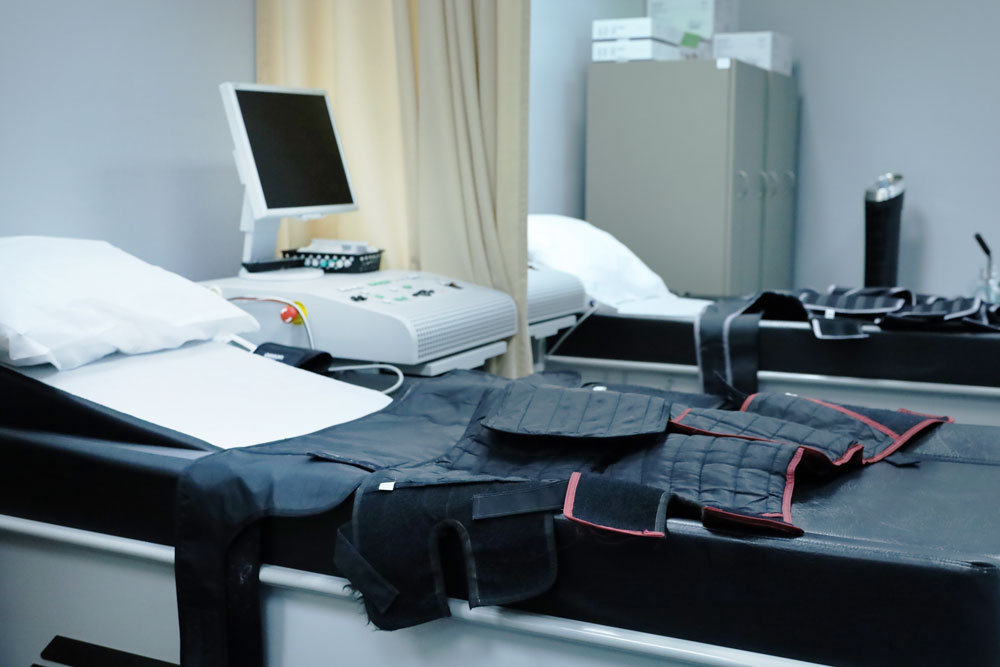
I started doing EECP treatments on my patients in 1991, and to this date, we have the largest number of patients that have completed EECP treatments in the state of Florida.
Initially, it was not covered by insurance but subsequently, mostly because of my efforts, Medicare started reimbursing it in the mid 1990 era. However, the reimbursement was drastically reduced. In addition, they restricted it only for patients who are having refractory angina pectoris.
These patients needed to meet the criteria for insurance reimbursement as follows:
- angina pectoris on maximum medical therapy
- angina pectoris with no effective percutaneous techniques for revascularization or bypass surgery
Other Indications I feel are not being adequately utilized
1. The patient is with the extensive evidence of small-vessel disease.
These are diabetic patients, or sometimes patients with metabolic endotoxemia, and angiographically. They do not have extensive calcified atherosclerotic plaquing but, they have small-vessel disease. These patients have classic angina pectoris, and the stress test can be normal but the the patient is having angina pectoris. That is why the description of the angina and chest discomfort is very important.
EECP has been shown to improve chest discomfort in this group of patients. The mostly females. They usually between the age of 30 and 50. This used to be called syndrome X.
2. The patients who have extensive coronary calcification, not experiencing angina, and a negative nuclear stress test or CT angiogram.
These patients have extensive disease but are not experiencing ischemia at this time. In this group of patients, EECP can be helpful because it can enhance collateral blood flow so that in the event that the plaque does rupture in one of the vessels, the patient will have adequate collaterals.
The growth of future collaterals can be done through an exercise program, intense dietary measures, and EECP. EECP will give the patients massive growth in collaterals in seven weeks, what would otherwise take them years to develop.
As an anecdotal experience, you will notice that young patients get massive myocardial necrosis when the incur a myocardial infarction compared to older people who have more collaterals and therefore the occlusion of the artery at the same spot, causes less myocardial necrosis.
This indication to do EECP is not covered by insurance. As mentioned above, the patient’s do not meet the criteria for reimbursement by insurance because they are not having angina pectoris. However the course is very inexpensive and costs around $5,000 for the entire course. The course is approximately seven weeks long if you do 1 hour sessions Monday to Friday, and if you do 2 hour sessions, it can be completed in half the time. Patients who are from out of town, can use the abbreviated course so that it can all be done in three and half weeks.
3. The patients with coronary artery disease, and have positive stress tests, but are not having angina pectoris.
The use of EECP in these patients was not reimbursed by insurance because they are not having chest discomfort. However, this is a totally wrong approach to patients who have myocardial ischemia but not having angina pectoris. 80% of myocardial ischemia is silent, so just because the patient is not experiencing angina pectoris does not mean that they do not need EECP treatments. If the patient is having a positive stress test but it is from side branches, or the coronary angiogram demonstrates that there is no need for any stent placement, those patients should be offered EECP treatments.
Summary
- Candidate for eecp include patients who have angina pectoris and have no option for stenting or bypass
- patients with positive stress tests, but you not going to do pci or bypass and they are not having angina (faulty anginal warning system)
- patients with syndrome x
- patients with extensive coronary calcification, thereby known coronary artery disease but negative stress test. They simply want to enhance collateral blood flow
Conclusion
Bottom Line: In addition to traditional recommendations for EECP which is angina pectoris refractory to medical therapy, with no other interventional or surgical options, I expand my use of this technique in patients who have extensive coronary artery disease, not experiencing angina pectoris.
References
MUST-EECP (Multicenter Study of Enhanced External Counterpulsation): This randomized, blinded, controlled trial involving 139 patients was a foundational study.
Reference: Lawson, W. E., et al. “Safety and efficacy of enhanced external counterpulsation in patients with angina pectoris: a multicenter experience.” Circulation 100.24 (1999): 2420-2425. (Snippet from)
Findings: Demonstrated significant reduction in anginal episodes, decreased nitroglycerin usage, and increased time to ST-segment depression on stress testing in the active treatment group compared to the sham control.
International EECP Patient Registry (IEPR): Data from this large registry provided extensive real-world evidence.
Reference: Barsness, G. W., et al. “The International EECP Patient Registry (IEPR): presenting characteristics and clinical outcomes of patients with stable angina pectoris.” Circulation 104.18 (2001): 2164-2169. (Snippet from)
Findings: Showed that 69% of patients improved by at least one Canadian Cardiovascular Society (CCS) angina class immediately after EECP, with 72% maintaining that improvement at a one-year follow-up.
PEECH (Prospective Evaluation of EECP in Congestive Heart Failure) Trial: While focused on heart failure, this trial highlighted broader cardiovascular benefits.
Reference: Feldman, A. M., et al. “Effects of enhanced external counterpulsation on symptoms, exercise tolerance, and quality of life in patients with cardiac disease: the PEECH trial.” Journal of the American College of Cardiology 44.11 (2004): 2153-2160. (Snippet from)
Findings: Demonstrated improvements in quality of life and NYHA functional classification in patients with heart failure.
Meta-Analyses and Review Articles
Myocardial Perfusion: A systematic review and meta-analysis confirmed that EECP therapy significantly increases myocardial perfusion in CAD patients.
Reference: Qin, S., et al. “Does Enhanced External Counterpulsation (EECP) Significantly Affect Myocardial Perfusion in CAD Patients? A Systematic Review and Meta-Analysis.” PloS one 11.4 (2016): e0152522.
Findings: The pooled results supported the continued use of EECP in CAD patients and suggested improved myocardial perfusion as a physiological mechanism for symptom relief.
Endothelial Function: Multiple studies suggest that EECP improves endothelial function by increasing shear stress on the vascular walls, promoting the release of beneficial factors like nitric oxide and reducing inflammation.
Reference: Sun, H., et al. “Enhanced external counterpulsation ameliorates endothelial dysfunction and elevates exercise tolerance for patients with coronary heart disease: a comprehensive study.” Frontiers in Cardiovascular Medicine 9 (2022): 997109.
Reference: Werner, D., et al. “External counterpulsation therapy improves endothelial function in patients with coronary artery disease.” Journal of the American College of Cardiology 42.11 (2003): 2011-2018.
Symptom Relief and Quality of Life: A general meta-analysis on the safety and effectiveness in refractory angina patients.
Reference: Alizadeh, M., et al. “A systematic reviews and meta-analysis: safety and effectiveness of enhanced external counterpulsation in refractory angina patients.” Journal of King Saud University-Science 34.1 (2022): 101680.
Findings: Concluded that approximately 85% of patients showed improvement in angina class, with benefits in exercise tolerance and quality of life that can be sustained for several years.